What To Know Before You Choose A Ford Or Toyota
Affordable Vehicle Options At Crossroads Ford Of Henderson
Choosing between Ford and Toyota usually comes down to how you drive, what you haul, and how long you plan to keep the vehicle. For shoppers weighing a Ford vs. Toyota comparison, the biggest differences show up in trucks, SUVs, towing capacity, cargo space, technology features, and the ownership experience tied to each model.
At Crossroads Ford of Southern Pines, we’ve built this buyer’s guide as a fast path through six model matchups that matter most to local shoppers. If you want a practical answer to Ford vs. Toyota, continue reading to discover which model best fits your lifestyle.
Compact SUVs: Ford Escape vs. Toyota RAV4
The compact SUV class is where many buyers start a Ford vs. Toyota SUV search, because the Ford Escape and Toyota RAV4 both target commuters, couples, and small families who need reliable MPG, cargo space, and driver-assist features without moving into a larger footprint. The Ford Escape stands out for road comfort, easy-to-use infotainment, and a cabin layout that feels built for everyday errands, school drop-offs, and highway commuting.
The Toyota RAV4 remains one of the segment’s most visible choices because Toyota has strong recognition in fuel economy and resale value conversations. Buyers who want a commuter SUV with broad market familiarity often begin there, but many shoppers find the Ford Escape easier to live with if comfort, touchscreen usability, and practical value matter more than name recognition alone.
For a deeper head-to-head comparison of the Ford Escape vs. Toyota RAV4, our blog covers them more in-depth.
Best Fit for Commuters and Small Families
The Ford Escape vs. Toyota RAV4 comparison matters for buyers who want a compact SUV that still handles groceries, strollers, sports gear, and daily commuting without feeling oversized. In this part of the market, the best value often comes from how well interior space, safety technology, and ride quality work together rather than from badge preference alone.
Three-Row Family SUVs: Ford Explorer vs. Toyota Highlander
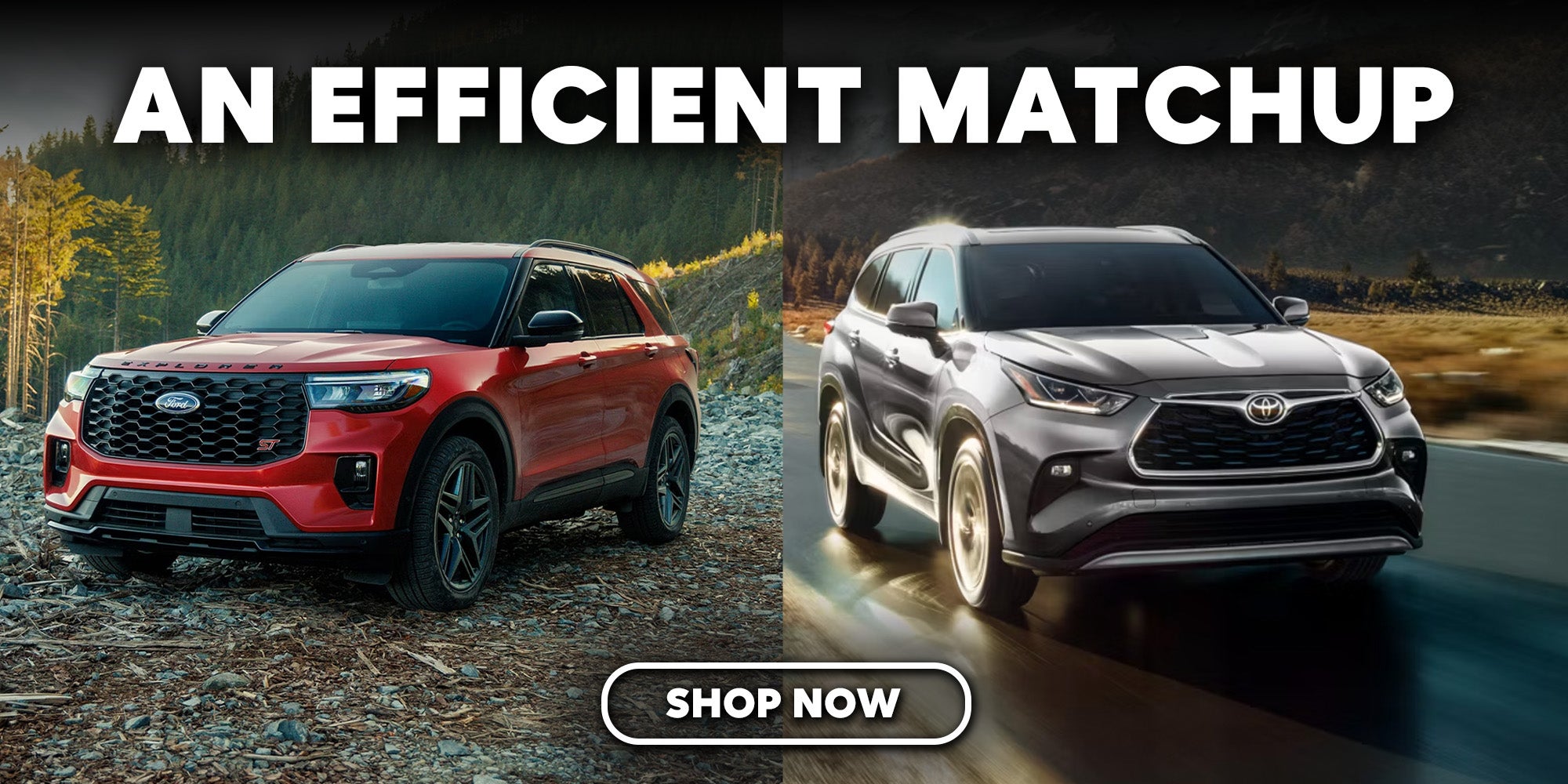
The Ford Explorer and Toyota Highlander sit at the center of the family SUV debate because both promise third-row seating, cargo flexibility, and daily drivability, yet they deliver those strengths in different ways. The Ford Explorer appeals to buyers who want a more capable feel, stronger performance options, and the rear-wheel-drive-based character that often translates into better confidence when towing or carrying a full cabin.
The Toyota Highlander serves families who prioritize efficiency, smoothness, and a softer road demeanor over outright utility. That makes this Ford Explorer vs. Toyota Highlander comparison less about which model is universally better and more about whether your household needs passenger room and capability or a lighter-duty family-first experience.
Choosing the Right Family SUV
Families moving up from a midsize SUV often underestimate how much third-row seating design affects the ownership experience. The right three-row SUV should fit your passengers, your weekend cargo, and your tolerance for daily parking and fuel stops, not only your budget.

Adventure SUVs: Ford Bronco vs. Toyota 4Runner
The Ford Bronco and Toyota 4Runner anchor one of the most searched off-road SUV matchups because both carry strong adventure vehicle credibility, but they approach trail performance from different eras of design. The Ford Bronco feels more purpose-built for modern off-road capability, with a configurable layout, open-air appeal, and feature set that speaks to buyers who want both trail hardware and current technology features.
The Toyota 4Runner keeps its appeal through body-on-frame toughness and a durability image that still resonates with buyers focused on simplicity. That reputation matters, but Ford vs. Toyota reliability should never be reduced to old assumptions, because maintenance history, use case, warranty coverage, and how often a vehicle sees demanding terrain all shape long-term ownership more than brand myth.
Reliability Perception vs. Modern Capability
In the Ford Bronco vs. Toyota 4Runner research, Toyota often benefits from a stronger reliability reputation, while Ford often wins on modern capability and feature execution in this category. Buyers should compare service history, intended use, and maintenance costs model by model, because an off-road SUV used hard will age differently than one used as a suburban daily driver.
Full-Size SUVs: Ford Expedition vs. Toyota Sequoia
The Ford Expedition and Toyota Sequoia compete in a segment where real-world usability matters just as much as capability, especially for families balancing passengers, cargo, and weekend towing. While the Toyota Sequoia leans into its modern hybrid approach and strong performance feel, the Ford Expedition stands out with greater interior flexibility, more usable cargo space, and features designed to make everyday ownership easier. In a closer look at the Ford Expedition vs. Toyota Sequoia, it becomes clear that Ford prioritizes what many drivers value most—room to stretch out, easier third-row access, and practical solutions for hauling both gear and people.
Where the Toyota Sequoia emphasizes power delivery and efficiency, the Ford Expedition focuses on comfort and versatility, offering a more accommodating cabin and smarter storage throughout. Families, road-trippers, and anyone regularly loading up for activities will appreciate how the Ford Expedition adapts to changing needs without feeling cramped. Add in user-friendly towing technology that simplifies hitching and maneuvering and the Ford Expedition MAX flexibility when you need even more room, and this SUV positions itself as the more well-rounded choice for drivers in their daily life.
Why the Ford Expedition Stands Out for Space and Utility
Both models offer large touchscreen layouts, smartphone integration, and advanced safety systems through Ford Co-Pilot360® and Toyota Safety Sense™. While the Toyota Sequoia has the MPG advantage, the Ford Expedition delivers more space, stronger family hauling flexibility, and a better fit for households that need one vehicle to cover travel, towing, and daily use.
Midsize Trucks: Ford Ranger vs. Toyota Tacoma
The Ford Ranger and Toyota Tacoma define the midsize truck conversation because buyers want pickup capability without stepping up to a full-size truck. The Ford Ranger makes its case through strong turbocharged performance, practical towing capability, and a cabin that feels more aligned with modern daily driver expectations than with pure weekend image.
Meanwhile, the Toyota Tacoma remains a benchmark because Toyota has built deep loyalty around off-road identity and resale value. Still, the Ford Ranger vs. Toyota Tacoma truck debate is often won or lost in weekday use. The Ford Ranger tends to appeal more to buyers who need a work truck that can also handle commuting, family errands, and occasional trail duty without feeling overly specialized.
Off-Road Image vs. Everyday Use
Many midsize truck shoppers begin with trail branding and end up buying based on seat comfort, visibility, infotainment, and towing confidence. That shift matters because the Ford Ranger ownership experience is one that works Monday through Friday, and not only on a Saturday trail run.
Full-Size Trucks: Ford F-150 vs. Toyota Tundra
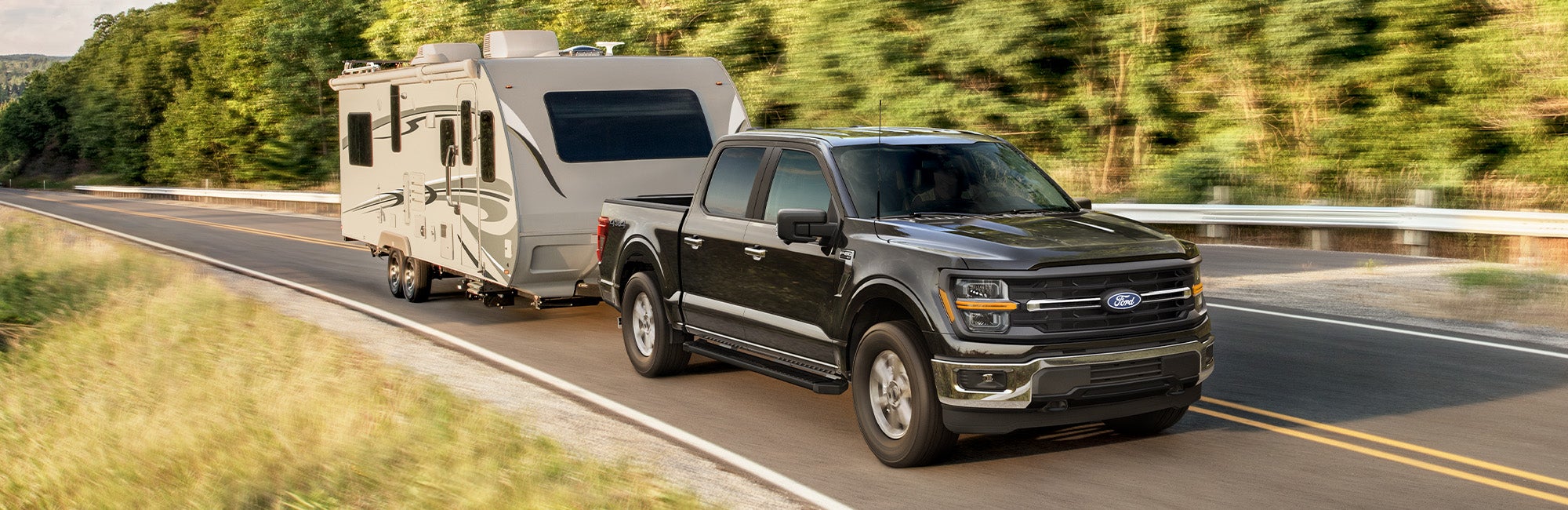
The Ford F-150 and Toyota Tundra sit at the center of the Ford vs. Toyota trucks debate because full-size truck buyers often need one vehicle to serve as a work truck, tow rig, and family hauler. The Ford F-150 keeps its edge through broad trim levels, multiple engine options, strong towing reputation, and the kind of cab configurations and bed lengths that let buyers match the truck to the job instead of settling for a narrower setup.
The Toyota Tundra brings standard power and bold styling that will appeal to buyers who want a modern-looking truck with strong straight-line confidence. Yet in a Ford F-150 vs. Toyota Tundra comparison, Ford’s wider truck lineup and greater flexibility across payload, towing capacity, and everyday usability make it easier for more buyers to find the right fit.
What Truck Buyers Should Compare First
Truck shoppers should start with towing, payload, engine options, and cab configurations before focusing on badge loyalty. A full-size truck is a tool first, and the model that best matches your trailer, crew, and cargo needs will usually deliver the better long-term value. This is why most select the Ford F-150 for its broader configuration range and stronger work-ready flexibility that give it the advantage for more truck buyers.
Ford vs. Toyota Reliability, Value, and Ownership Costs
Ford vs. Toyota reliability is one of the highest-intent comparisons in the market, but brand reputation alone is not a complete ownership metric. Reliability depends on the specific model, powertrain complexity, maintenance habits, recall history, warranty coverage, repair costs, and whether the vehicle is being used within its intended role.
Toyota often carries the stronger perception for resale value and long-term dependability, especially among buyers who keep vehicles for many years. Ford models often counter with stronger feature value, more utility, and better fit-for-purpose choices across trucks and SUVs, which can reduce the cost of ownership if the vehicle’s towing capacity, cargo space, or interior space better matches how you live.
What Buyers Often Miss About Long-Term Ownership
Purchase price is only one part of long-term cost, because fuel, insurance, depreciation, maintenance costs, and use-case fit all affect the final equation. A buyer choosing between a Ford Explorer and Toyota Highlander or between a Ford F-150 and Toyota Tundra should compare the actual model pair, not make a blanket brand judgment. Toyota owns the stronger reputation-based reliability narrative, but Ford often delivers better value and utility where buyers need capability, space, and flexibility.
Which Brand Makes More Sense for You?
Ford models make more sense if your priorities center on capability, space, towing, engine variety, and a vehicle lineup with fewer compromises across trucks and SUVs. Toyota makes more sense if fuel economy, hybrid efficiency, and reliability perception carry more weight than maximum flexibility.
Choose Ford if:
-
You need stronger towing capacity, payload, or work truck capability.
-
You want more cargo space, passenger room, or third-row seating flexibility.
-
You prefer broader trim levels, engine options, cab configurations, or bed lengths.
Final Recommendation
Across this Ford vs. Toyota comparison guide, Ford wins more of the categories that matter to truck and SUV shoppers who need space, utility, and real-world flexibility. Toyota remains a strong alternative, especially for buyers focused on efficiency and reputation, but Ford is the better answer more often if your vehicle needs to tow, haul, carry family, and adapt as your life changes.
We created this comparison hub to help you move from research to a confident decision without wasting time on broad brand debates. Explore more when you visit our dealership in Southern Pines, NC, to test-drive the Ford model that best fits your needs.
FAQs
Which is better for trucks, Ford or Toyota?
Ford is often the stronger choice for truck buyers because it offers a wider lineup, more engine options, and stronger work-ready flexibility. The Ford F-150 and Ford Ranger cover more use cases across towing, payload, and daily driving.
Which brand is better for SUVs, Ford or Toyota?
It depends on the SUV category. Ford often leads in cargo space, towing, and off-road variety, while Toyota is often favored for hybrid efficiency and reputation.
Does Ford or Toyota cost less to maintain?
Maintenance costs vary by model, mileage, and service history. Toyota often has the edge in ownership-cost perception, but Ford can offer better value if its utility and capability better match your needs.
Which lasts longer, Ford or Toyota?
Both brands can last a long time with proper maintenance. Longevity depends more on model choice, service records, driving conditions, and whether the vehicle is used as intended.

More Info
| Monday | 9:00AM - 7:00PM |
| Tuesday | 9:00AM - 7:00PM |
| Wednesday | 9:00AM - 7:00PM |
| Thursday | 9:00AM - 7:00PM |
| Friday | 9:00AM - 7:00PM |
| Saturday | 9:00AM - 6:00PM |
| Sunday | Closed |
| Monday | 7:30AM - 6:00PM |
| Tuesday | 7:30AM - 6:00PM |
| Wednesday | 7:30AM - 6:00PM |
| Thursday | 7:30AM - 6:00PM |
| Friday | 7:30AM - 6:00PM |
| Saturday | 7:30AM - 3:30PM |
| Sunday | Closed |
| Monday | 7:30AM - 6:00PM |
| Tuesday | 7:30AM - 6:00PM |
| Wednesday | 7:30AM - 6:00PM |
| Thursday | 7:30AM - 6:00PM |
| Friday | 7:30AM - 6:00PM |
| Saturday | Closed |
| Sunday | Closed |